

D-Mind Camp : ค้นหาหนังสือธรรมะ หน้า 75 / 81
หน้าหนังสือทั้งหมด
80
The Three Forms of Craving in Buddhism
The Three forms of Craving
The Lord Buddha taught that there are three sorts of craving: craving for sense-pleasure [kāmaṭhaṇa], craving for the form realms [bhavatānha] and craving for the formless r
The Lord Buddha identified three types of craving: 1) Craving for Sense-Pleasure (kāmaṭhaṇa) signifies a longing for sensory experiences which misleads individuals into thinking happiness comes from e
82
Understanding Craving in Buddhism
knowledge of such ascetics are the Formless Brahma Realms — knowledge gained as the result of developing the formless absorptions [arûpajhâna]. Such ascetics misunderstand that being reborn in the For
This text delves into the Buddhist concept of craving, specifically how its pursuit influences rebirth and suffering. It discusses the misinterpretation by ascetics aiming for the Formless Brahmā real
84
The Dangers of Craving in Buddhism
four unfortunate realms [abhāyabhūmi]. Just as the swift currents of a river tend to sweep away all things to the ocean that fall within its reach, desire will tend to pull all beings who entertain it
This text discusses the profound impact of craving on beings, illustrating how it drives them towards hell realms and unwholesome actions. The Buddha's teachings emphasize that craving can lead to sin
85
The Path of Wholesomeness and Unwholesomeness
- stealing [adinnāḍāna]
- committing adultery [kāmesumicchācāra]
Unwholesome speech comprises:
- telling lies [musāvāda]
- divisive speech [pisuṇaṅāṭa]
- harsh speech, insults and swearing [pharusavaṭ
In Buddhism, ten unwholesome behaviors are cautioned against: stealing, committing adultery, lying, divisive speech, harsh speech, idle chatter, covetousness, vengeful thinking, and false views. These
89
Understanding Craving and its Effects
yingly frequently, until our seeing wrong as right and harmful things as harmless will be our continuous perspective of the world. We lose our interest to train ourselves in meditation and in the abse
The text discusses how craving influences our perceptions and behaviors, comparing it to sticky resin that binds our minds to attachments and sense pleasures. It warns that indulging in cravings leads
90
Understanding the Pursuit of Happiness and the Cycle of Existence
Those who search for happiness via sense pleasure only
experience happiness at the moment before suffering mani-
fest itself. As soon as suffering becomes manifest, such peo-
ple are often so shocked
This text discusses the fleeting nature of happiness derived from sense pleasures and the inevitable suffering that follows. It compares individuals ensnared by cravings to a rabbit caught in a hunter
95
The Noble Truth of the Cessation of Suffering
The Noble Truth of the Cessation of Suffering
When the Lord Buddha had finished his explanation of the origin of suffering, he continued with an explanation of the cessation of suffering. The essence
This text explains the Buddha's teaching on the cessation of suffering, emphasizing the importance of extinguishing craving through the Noble Eightfold Path. It highlights that addressing the root of
97
Understanding Craving and Suffering in Buddhism
practices will lead them to an end of suffering — but without realizing that it is only adding to their suffering. Thus it is compared to a dog who seizes whatever it likes from the owner without tak
This text elaborates on the Buddhist perspective regarding craving as the fundamental cause of suffering. It compares improper practices to a dog snatching things without regard, while proper practice
103
The Noble Eightfold Path and Buddhist Sainthood
fold Path diligently to the extent they are prepared to lay down their life for their practice, have the chance to uproot craving from the mind by transcendental extinction — by attaining the various
This text discusses the profound dedication of practitioners of the Noble Eightfold Path, illustrating how some are willing to sacrifice their lives for their spiritual journey. It highlights notable
110
Understanding the Dhamma Body and Its Levels
reach the station, from there we take the train to the airport and eventually take the aeroplane that will take us to our destination.
All the various inner spheres and bodies all the way from the Phy
This text delves into the concept of the Dhamma Body, highlighting its intricate structure composed of multiple layers, each representing a different level of spiritual refinement. Luang Phaw Wat Pakn
129
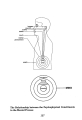
images
sounds
scents
tastes
touch
mental phenomena
MIND
perception
filtering
processing
knowing
perception
filtering
processing
knowing
The Relationship between the Psychophysical Constituents in th
142
The Path to Enlightenment: Understanding Dhammakāya
the knowledge arising from cognition may be erroneous.
The knowledge arising from 'knowing', by contrast, de-
pends on the Dhammakāya — it is knowledge based on
true wisdom such as the Four Noble Trut
This text discusses the distinction between knowledge gained through cognition and that which arises from true wisdom based on the Dhammakāya. It details the bodhisatva's rigorous meditation practice
144
The Components of the Eightfold Path
The Components of the Eightfold Path all arise together
When the factors of the Eightfold Path arise, they do so to-
gether — just as the elder monk Koṇḍañña, after listening
to the Dhammacakkapavatta
This text discusses the Eightfold Path, emphasizing how all eight components arise together as illustrated by the elder monk Koṇḍañña's attainment of Stream-Entry. It explains the importance of Right
151
The Tale of the Ogres and the Boy
ogre said to the other that they ought to eat the boy up,
but the other ogre forbade him. The False View ogre ig-
nored the warning and grabbed the boy’s feet, waking
him. The boy was startled and exc
In this tale, two ogres discuss eating a boy but are interrupted when the boy wakes. The True View ogre insists they help him instead. They transform into the boy's parents to bring him food and leave
152
The Significance of the Triple Gem and Six Recollections
1. Recollection of the virtues of the Buddha with the words "Itipi so bhagavā arahant sammāsambuddho..."
2. Recollection of the virtues of the Dhamma with the words "Suākkhāto bhagavā dhammo..."
3. R
This text emphasizes the importance of recollecting the virtues of the Buddha, Dhamma, and Sangha, along with mindfulness of the body and the cultivation of compassion and loving-kindness towards all
158
The Nature of Wives in Buddhist Teachings
7. A wife like an slave: A wife who allows herself to be abused, slapped or beaten by her husband without becoming angry or vengeful and without blaming her husband, who is contented to be completely
This text discusses different types of wives in Buddhist teachings, illustrating how their characteristics influence their karmic outcomes. It differentiates between negative types, like a wife who is
162
Teachings of the Buddha on Nobility and Right Action
ter asking all the monks’ names, the Buddha would ask his. The Buddha knew what he was thinking and asked the man his name. “Ariya” replied the man. In fact, the Buddah didn’t need to be told the man’
In this text, the Buddha teaches that true nobility is defined by one's actions towards living beings. Ariya learns that harming others disqualifies him from being 'noble', resulting in his attainment
165
Understanding Right Livelihood and Wrong Trade
hardly be able to find anyone to praise them;
4. They will spend forthcoming lifetimes in hell.
Having heard the Buddha’s teaching, Khema attained
stream-entry, never committing adultery again
This ex
In Buddhist teachings, Right Livelihood refers to earning a living that upholds ethical values and avoids harmful practices. It specifically highlights five types of Wrong Trade which are prohibited:
167
Understanding Wrong Livelihood and Its Varieties
take advantage of the measure not being completely filled.
Again such behaviour is dishonest.
Moreover, surveyors in charge of measuring land for a buyer, if they are dishonest or corrupt and don’t ge
This text delves into the concept of Wrong Livelihood, highlighting dishonest practices such as corrupt land measurement, bribery, and fraudulent transactions. It illustrates various forms of deceptio
171
The Transformative Journey of Animals and a Hermit
the vow that he would not go foraging any more for as long as he could not still his mind from desire.
The snake had been trodden upon by a "holy cow" and had bitten the cow, accidentally killing it.
This narrative explores the stories of various animals and a hermit who each confront their weaknesses—anger, greed, and arrogance. A snake, having killed a cow in a moment of uncontrolled anger, vows